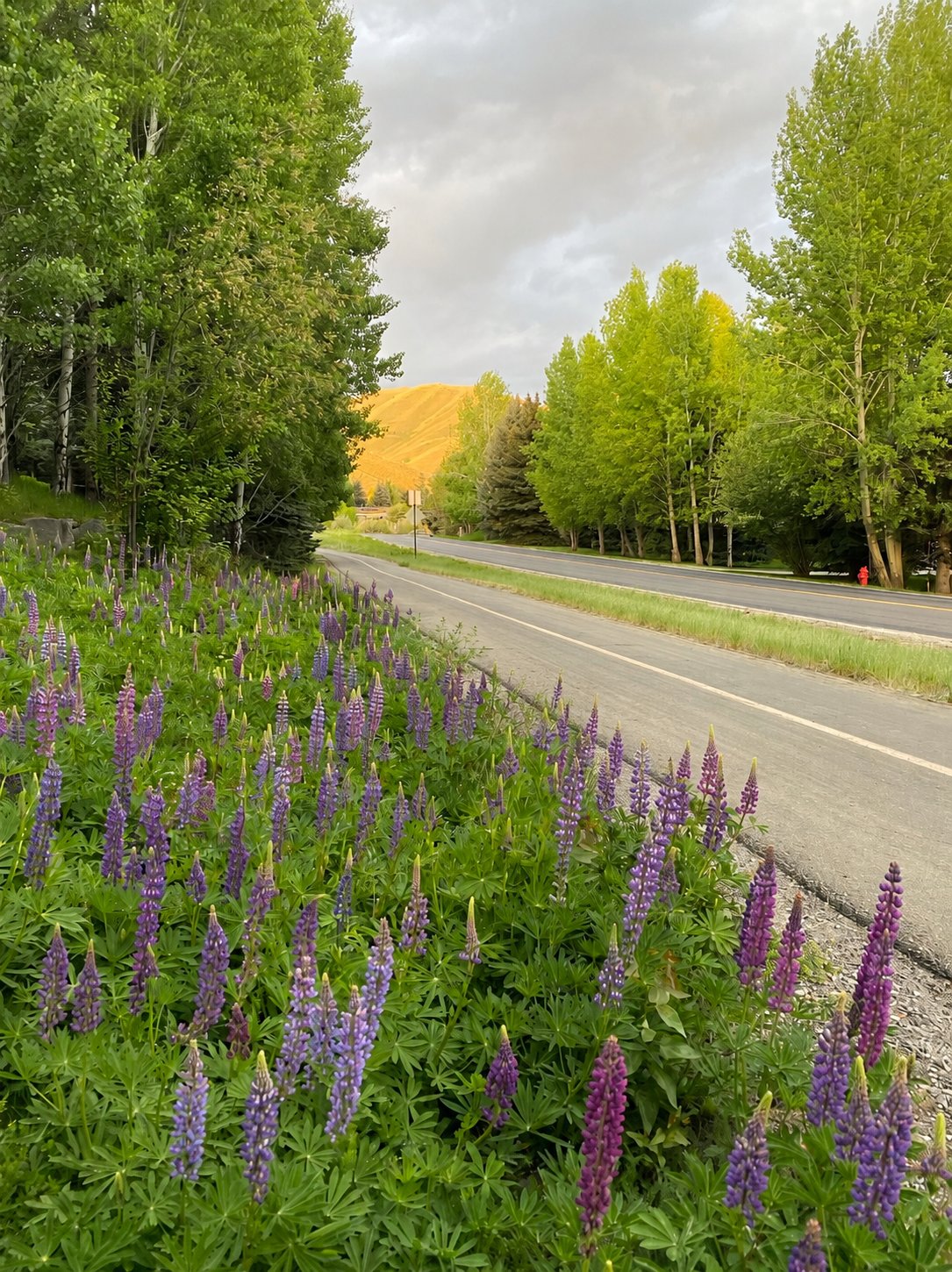
Few amenities are woven into daily life in the Wood River Valley quite like the bike path.
On any given summer morning, you'll find cyclists commuting to work, families out for a leisurely stroll, runners enjoying the cool air, and visitors experiencing the valley at a slower pace. The path has become such a natural part of life here that it's easy to forget it wasn't always there.
What many people don't realize is that the bike path's history is deeply connected to the story of Sun Valley itself.
From Railroad to Recreation
Long before the bike path existed, the route served a very different purpose.
In the 1880s, the Union Pacific Railroad ran through the Wood River Valley, connecting communities throughout southern Idaho and transporting passengers, goods, and resources across the region. The railroad played a significant role in the valley's growth and would ultimately help shape the future of Sun Valley.
When Union Pacific Chairman Averell Harriman and his team set out to create America's first destination ski resort in the 1930s, access was critical. Sun Valley needed a way to bring visitors from major cities directly into the mountains.
The railroad provided the answer.
When Sun Valley Resort opened in 1936, guests traveled by train from across the country, arriving in the Wood River Valley to experience what was then a revolutionary concept: a luxury ski destination designed specifically for recreation. Hollywood celebrities, business leaders, and outdoor enthusiasts all made the journey west, helping establish Sun Valley's reputation as one of the country's premier mountain destinations.
A New Vision for the Corridor
As transportation evolved and rail service declined, portions of the railroad corridor eventually became inactive until it was finally abandoned during the mid-1980s.
Over time, sections of the former rail line were transformed into the Wood River Trail system, creating a safe and accessible pathway connecting communities throughout the valley. What was once a transportation corridor carrying trains gradually became a pathway carrying cyclists, walkers, runners, and families.
Today, the trail stretches from Bellevue through Hailey, Ketchum, and Sun Valley, connecting neighborhoods, schools, parks, businesses, and recreation areas along the way.
More Than Just a Bike Path
In many communities, recreation requires planning. You load up the car, drive to a trailhead, and carve out time for an outing. Here, the bike path is part of the community's infrastructure. Residents can leave their front door and immediately connect to miles of protected pathways.
Children ride to school. Neighbors meet for morning walks. Visitors explore town without needing a vehicle. Families spend entire afternoons riding between communities while enjoying views of Bald Mountain, the Big Wood River, and the surrounding peaks.
Why It Matters
When people ask what makes Sun Valley different from other mountain towns, the answer is rarely a single attraction or amenity.
It's the combination of thoughtful planning, access to recreation, strong community connections, and an extraordinary natural environment.
The bike path embodies all of those qualities.
What could have become a forgotten piece of infrastructure instead became one of the region's most beloved amenities. It enhances quality of life, supports healthy lifestyles, reduces dependence on vehicles, and strengthens connections between our communities. It tells the story of where we've been, connects us to where we're going, and serves as a daily reminder of why so many people choose to call the Wood River Valley home.
The next time you find yourself riding along the path, following the Big Wood River, or taking in views of Bald Mountain, remember that you're traveling a route that has connected this valley for more than a century.
Only the mode of transportation has changed.
-Corey