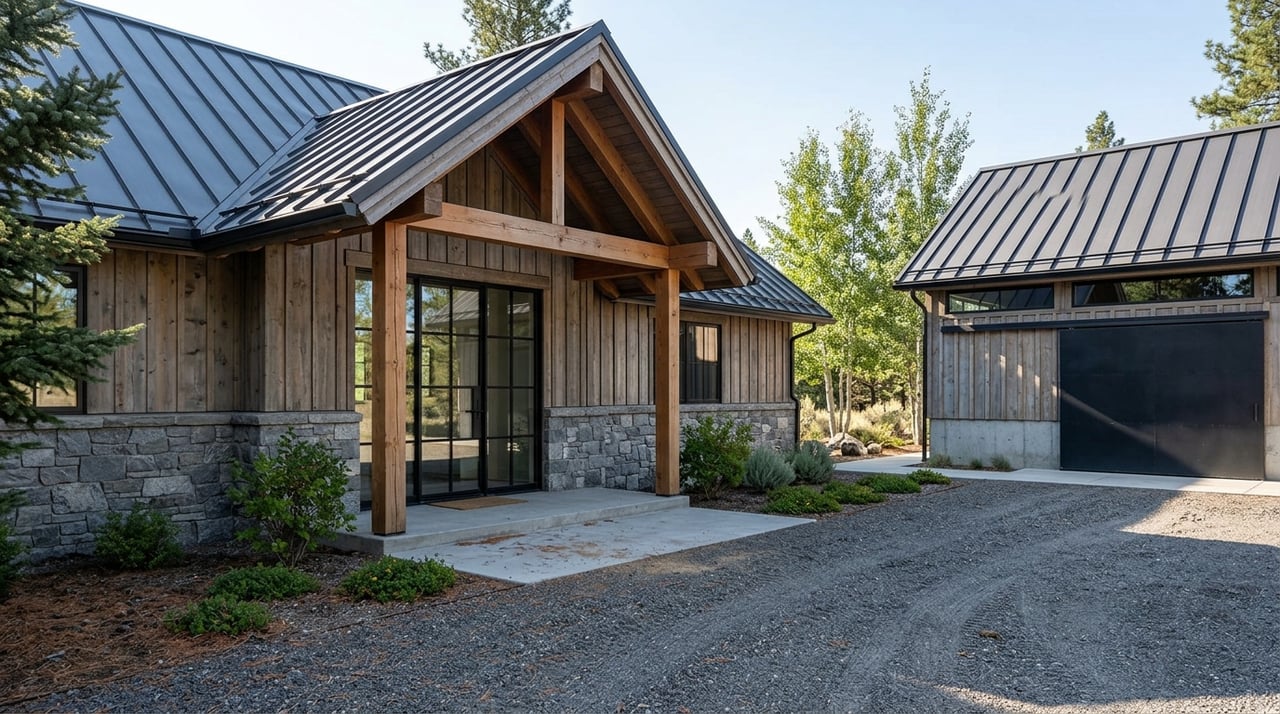
Thinking about a guest house, barn, shop, or studio on a Blaine County property? It is easy to focus on the building you want and miss the rules that shape whether it can actually work. If you are buying, improving, or planning a multi-structure property in the Wood River Valley, understanding how Blaine County classifies and reviews these projects can save you time, money, and frustration. Let’s dive in.
Start With the Structure Type
In Blaine County, the first question is not how big the building is. The first question is what the structure is meant to be.
That matters because a guest house with independent living features is usually treated very differently from a shop, garage, or barn. The county looks at how the structure functions, and that decision affects setbacks, permits, parking, septic review, and whether a conditional use permit may be required.
When a Guest Space Becomes an ADU
Blaine County defines an accessory dwelling unit, or ADU, as a separate building or part of a residential building that can function independently with living, sleeping, cooking, eating, and sanitation. In simple terms, if the space can work as its own home, the county is likely to view it as an ADU.
This can be especially important when you are evaluating a guest suite over a garage, a detached studio, or a bunkhouse. A space of 500 square feet or less, with no kitchen and no more than a half bath, may be treated as an accessory building instead of an ADU.
Accessory Structures Follow Different Rules
A shed, garage, workshop, or hobby building is usually an accessory structure. These buildings must remain subordinate to the main use on the lot, and in general, the county limits accessory-structure size to 75 percent of the gross floor area of the primary building.
That rule may not apply to detached ADUs, agricultural buildings, or indoor riding arenas. Still, if you are eyeing a property with a large shop or planning to add one, this is one of the first numbers to verify.
Agricultural Buildings Are a Separate Category
Barns and similar structures can be treated differently if they truly serve an agricultural use. In certain agricultural zoning districts, an agricultural building may not need a building permit, though it still requires a setback permit.
Outside those districts, a building permit is required. The county also says agricultural buildings may not be combined with other uses, so a barn-plus-workshop concept should be reviewed carefully with Land Use staff before you make assumptions.
Know the Permit Path Early
One of the biggest mistakes buyers make is assuming permit questions can wait until after closing. In Blaine County, every project is subject to zoning review, even if a building permit is not required.
Land Use staff reviews an application before Building staff handles the structural review. Depending on the project, zoning review can also trigger a hearing before the Commission or Hearing Examiner, which means legal feasibility should come before design spending.
Small Structures May Still Need Review
Detached non-habitable accessory structures, like a small storage shed or livestock shelter, may be exempt from a building permit if they are 120 square feet or less and 12 feet high or less. Once a structure is larger than that, or attached to another building, it generally moves into permit territory.
Even when a building permit is not required, zoning still applies. That means setbacks and site rules still matter.
ADU Approval Depends on Lot Size
For ADUs and Tiny Homes on Wheels, lot size plays a major role in what is allowed.
Here is the basic framework in Blaine County:
Lot Size | ADU Status |
|---|---|
Under 1 acre | May be allowed by conditional use permit |
1 to less than 2 acres | May be allowed by conditional use permit |
2 to less than 5 acres | One ADU is a permitted use |
5 acres or more | One ADU permitted, second may be allowed by conditional use permit |
ADUs are capped at 1,200 square feet, must be on the same lot as the principal residence, must meet setback rules, and must provide one on-site parking space with no street parking.
Overlay Districts Can Change the Answer
A parcel that looks workable at first glance may become more complicated if it sits within an overlay district. The county also places limits on where ADUs may go in these areas, and floodplain ADUs may require conditional use approval.
That is why a parcel map matters just as much as a floor plan. Before you count on adding a detached guest unit, shop, or second living space, it is smart to confirm how zoning overlays affect the site.
Utilities and Access Often Decide Feasibility
In many cases, the real constraint is not the building itself. It is whether the property can support it.
For multi-structure properties, septic, water service, and legal access are often the issues that determine whether your plans are realistic.
Septic Capacity Is Often the First Check
South Central Public Health District reviews and issues permits for new and repaired subsurface sewage disposal systems. It also offers site evaluations for home purchases and refinancing.
If you are considering a guest house or any additional dwelling space, septic capacity is often the first practical question. A property may have room for another building on paper but still fall short if wastewater service cannot support the added use.
Water Service Can Be Part of ADU Approval
For ADUs and Tiny Homes on Wheels, county code ties approval to water and wastewater serviceability. On smaller lots served by a regulated community water system or municipal water system, the county requires health district approval and a will-serve letter from the certified water operator before a conditional use permit can move forward.
That makes utility due diligence especially important if you are buying with future plans in mind. It is much better to verify serviceability early than to discover limitations after closing.
Access and Road Work May Add Time
If a parcel does not already have legal access, Blaine County requires a road access permit. The county says review of a complete approach or encroachment application typically takes about 15 days, and incomplete applications are not processed.
If the property is accessed from a private road, a road access permit is not required. Still, future building plans may involve easements, utility locations, engineering drawings, traffic control plans, or driveway and culvert work, so access should be part of your evaluation from the start.
Plan for Timing, Not Just Cost
In a market like Blaine County, timing matters almost as much as budget. If you are buying a property because of what you hope to build later, your schedule should account for review and permitting.
The county is now accepting digital plans only, and permit processing is usually about four weeks during the heavy season from March through October. Depending on the scope, your application may also require additional approvals before it is complete.
A Complete Application Often Needs More Than Plans
The county building checklist says stamped engineered structural plans are part of a complete application. Depending on the property and project, the permit package may also require HOA approval, fire district approval, and South Central Public Health District septic approval.
For ADU conditional-use applications, the county asks for a septic permit. On lots under two acres, a septic variance may also be needed at the health district’s discretion.
Think About Ownership Beyond Approval
A structure that gets approved still needs to work well over time. On multi-structure properties in Blaine County, long-term ownership often brings extra considerations tied to weather, land conditions, and future value.
Snow Load Matters Here
In Blaine County, snow load is not a minor issue. The county says structures built after 1977 with a building permit were designed to site-specific roof snow loads, which vary by location.
If you are buying a property with larger accessory buildings, shops, or barns, structural durability should be part of the conversation. If there are concerns about roof stability, the county suggests consulting a professional engineer.
Floodplain Rules Can Affect Design
The county operates a floodplain program with a no-adverse-impact policy. New floodplain construction must be anchored, use flood-resistant methods, and have the first floor of living space and mechanical systems at least two feet above the mapped flood level.
For buyers looking at creekside or low-lying parcels, floodplain rules can affect both placement and design. This is another reason site review should happen early.
Fences and Boundaries Still Count
On larger or more complex parcels, it is easy to focus on buildings and overlook site improvements. Blaine County requires fences, posts, and foundations to stay within the subject property, and fences over seven feet need a building permit.
Fences in overlay districts or hazard areas must also follow applicable setback rules. If a property’s usability depends on enclosure, separation, or livestock areas, boundary planning matters.
Improvements Can Change Property Taxes
The county assessor says taxable property is assessed at market value each year, and buildings, garages, and other value-adding structures are considered improvements. That means a multi-structure property may be valued differently from a simpler single-structure parcel.
If you are comparing two properties, this is worth keeping in mind. The lower-maintenance option and the more flexible option may carry different long-term cost profiles.
Tiny Homes on Wheels Have Ongoing Requirements
If you are considering a Tiny Home on Wheels as a guest unit, Blaine County treats it similarly to an ADU for many purposes. The zoning approval lasts five years and must be renewed if standards are still met.
That is a useful reminder that long-term flexibility depends on current code and ongoing compliance, not just what may have been allowed when a property was first improved.
A Smarter Way to Evaluate Multi-Structure Property
If you are searching in Blaine County, the most useful question is not just, “Can I fit another building here?” It is, “What does the county call this structure, and what does that trigger?”
That one shift in thinking can help you evaluate a property more clearly. It can also help you avoid overpaying for a parcel that looks full of possibility but comes with practical limits tied to zoning, septic, access, or overlays.
Whether you are buying a mountain home with room to expand or selling a property with multiple improvements, clear local guidance makes a real difference. If you want help thinking through how a guest house, shop, barn, or detached studio may fit into your Blaine County property search or sale strategy, connect with Corey on the Go.
FAQs
What counts as an ADU on a Blaine County property?
- In Blaine County, a space is generally treated as an ADU if it can function independently with living, sleeping, cooking, eating, and sanitation.
Can a small guest studio be treated as an accessory building in Blaine County?
- It may be treated as an accessory building instead of an ADU if it is 500 square feet or less, has no kitchen, and has no more than a half bath.
Do small sheds need permits in Blaine County?
- A detached non-habitable accessory structure may be exempt from a building permit if it is 120 square feet or less and 12 feet high or less, but zoning review and setback rules still apply.
How many ADUs are allowed on a Blaine County lot?
- That depends on lot size, with smaller lots often requiring a conditional use permit, lots from two to less than five acres allowing one ADU as a permitted use, and lots five acres or more allowing one ADU with a possible second by conditional use permit.
Why is septic so important for multi-structure properties in Blaine County?
- Septic capacity is often the first practical limit on whether a guest house or other additional dwelling can be added legally.
How long does permit processing take in Blaine County?
- The county says permit processing is usually about four weeks during the heavy season from March through October, assuming a complete application is submitted.